
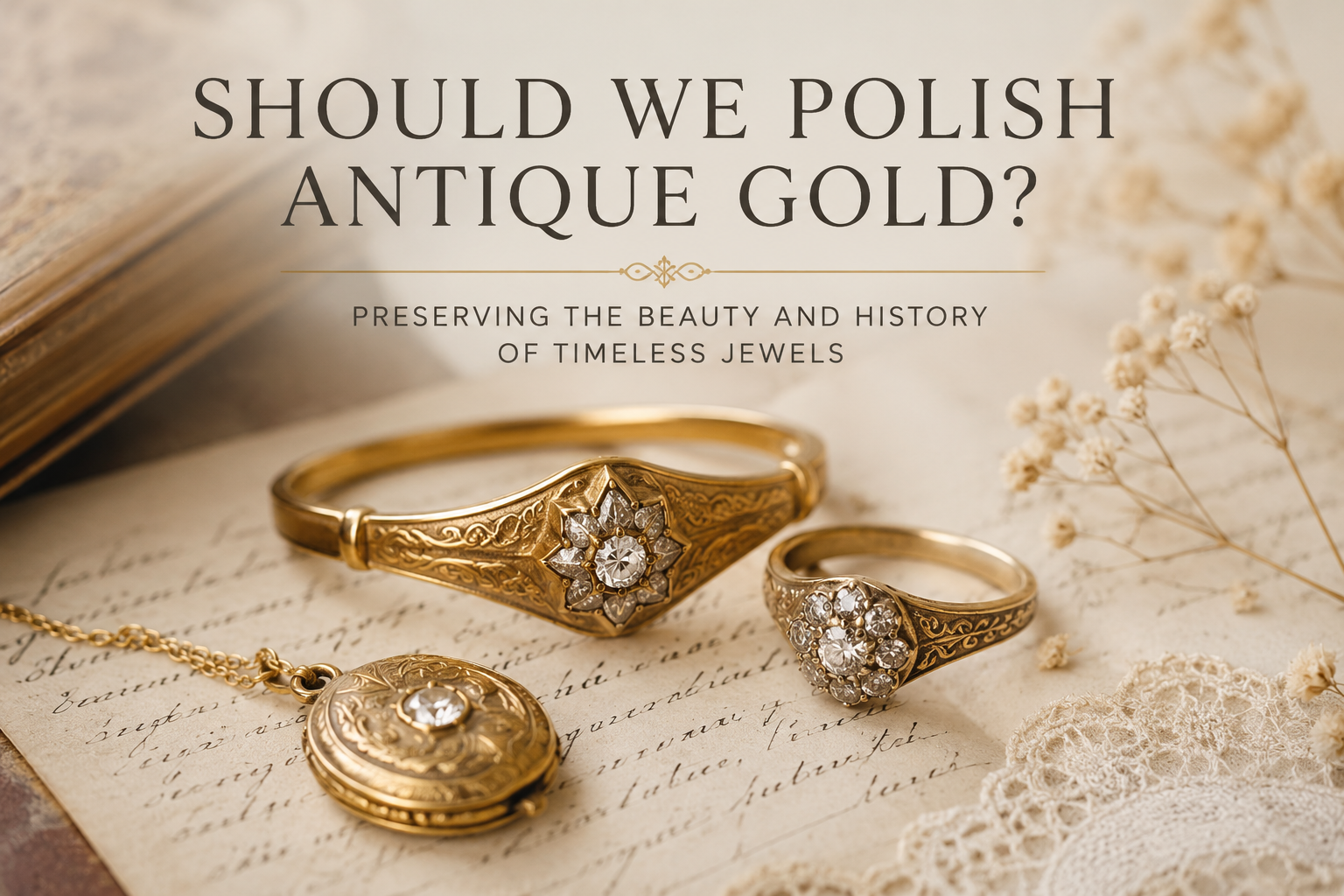
Should We Polish Antique Gold?
There is something wonderfully comforting about an antique jewel that looks its age.
The softened edges, tiny scratches, subtle variations in the gold, and traces of wear are not imperfections to us. They are evidence that the jewel has been worn, loved, and carried through another life before finding its way to us.
So, when it comes to antique gold jewelry, one question comes up quite often:
Should we polish it?
Our answer is usually: not unless it is necessary.
Patina is part of the story
When we talk about the patina of antique gold, we are not talking about dirt.
Over decades — sometimes centuries — gold naturally develops a different surface appearance. Everyday wear creates tiny scratches and softens crisp edges. Areas that have been handled frequently can become smoother, while recessed details may retain darker tones.
These subtle changes give an antique jewel its character.
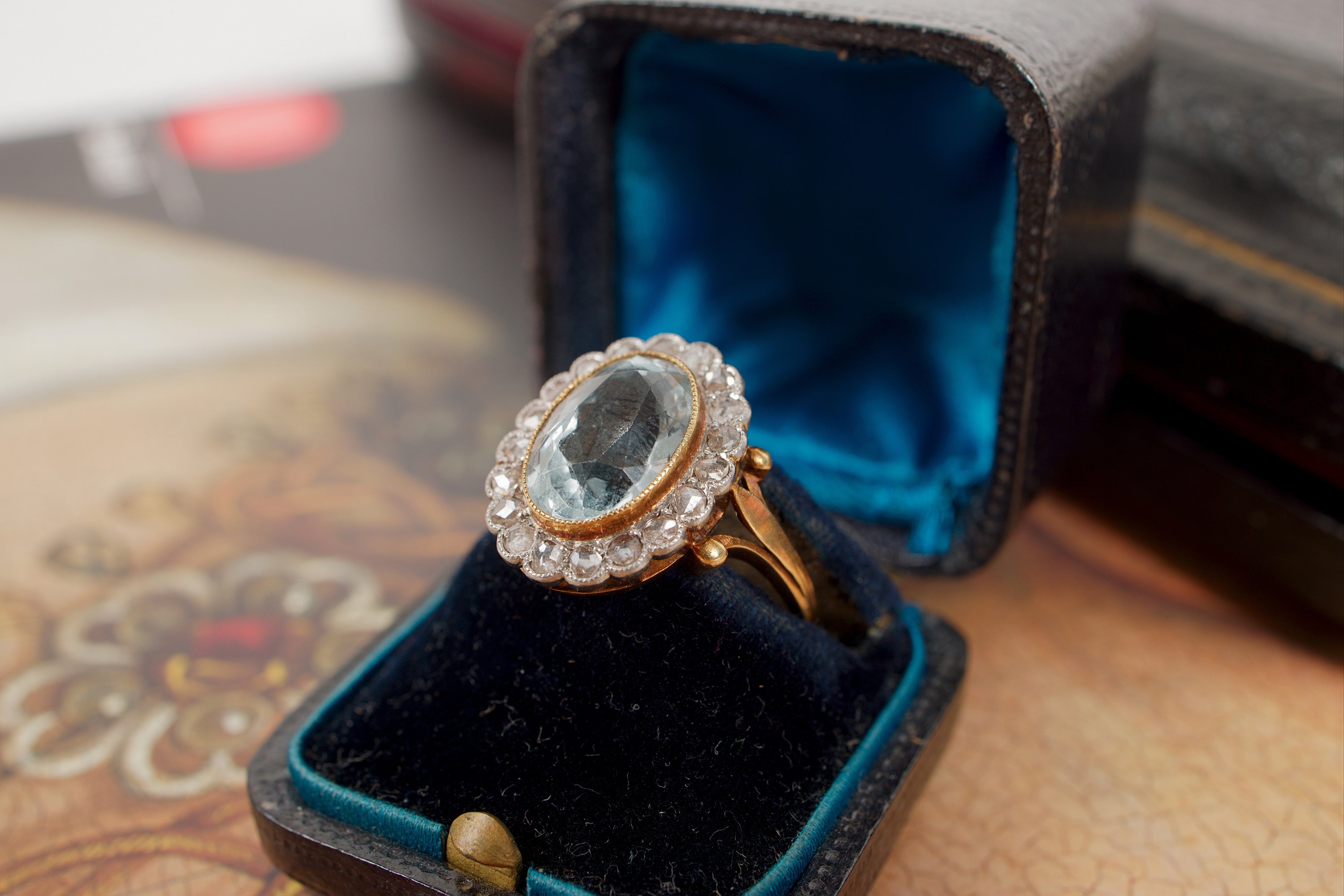
A Victorian ring that has been worn for 150 years should not necessarily look as though it left a jewelry workshop yesterday. To us, that would almost be missing the point.
The age of the jewel is part of its beauty.
But isn't gold supposed to be shiny?
It certainly can be.
Gold jewelry is often polished before being sold, and a professional polish can restore a beautiful glow to a piece that has become dull or heavily scratched.
The question is not whether gold can be polished. It is whether it should be.
With antique jewelry, we prefer to be conservative.
Every time a piece is polished, a very small amount of metal can be removed. A single professional polishing may have little noticeable effect, but repeated polishing over many years can gradually soften details, edges and engraved decoration.
On a beautifully made antique jewel, those details can be incredibly important.
A crisp Victorian engraving, a delicate milgrain edge, an engraved shoulder or an original textured surface may be part of what makes the piece special.
When polishing can be worthwhile
That doesn't mean we never polish antique gold.
There are situations where professional cleaning or polishing is absolutely appropriate.
For example, a piece may have:
-
Deep scratches that significantly affect its appearance
-
Tarnish or residue that cannot be removed through gentle cleaning
-
A heavily worn or uneven surface
-
Previous repairs that need to be blended carefully
-
Dirt accumulated in areas that cannot be safely cleaned at home
In these cases, a careful professional intervention can make the jewelry more wearable while preserving as much of its original character as possible.
The key word is careful.
We would much rather remove less than more.
Cleaning is not the same as polishing
This is an important distinction.
A piece can often be cleaned without being aggressively polished.
A gentle professional cleaning can remove everyday dirt and residue while leaving the natural surface of the gold intact.
This is often all an antique jewel needs.
In fact, when we receive a particularly beautiful old jewel, our first instinct isn't:
“How can we make this look new?”
It is:
“What can we preserve?”
That difference in approach matters.
What about white gold?
White gold is a slightly different story.
Many antique and vintage white-gold pieces were originally rhodium-plated, or may have developed their own surface appearance through age and wear. Re-polishing and re-plating can significantly change the appearance of an older jewel.
For this reason, we are particularly cautious with antique white gold.
Before any intervention, it is worth understanding what the original surface was intended to look like and whether polishing or replating might remove an important aspect of the jewel's character.
The beauty of an imperfect antique
One of the reasons we love antique jewelry is precisely because it isn't perfect.
A tiny scratch on the back of a ring.
A slightly softened engraving.
A subtle variation in the color of old gold.
A surface that has become smooth from decades of wear.
These details tell us that the jewel existed before us.
Someone chose it. Someone wore it. Someone loved it enough to keep it.
And now it has found its way into another chapter.
For us, those traces aren't something to erase.
We prefer antique jewelry to look antique.
That doesn't mean neglected or dirty. It means beautifully cared for, wearable, and still honest about its age.
When we restore an antique jewel, our goal is therefore not to make it look new.
It is to help it look its best without erasing its history.
And perhaps that is the real question to ask before polishing an antique jewel:
Do we want to make it look newer — or do we want to preserve what makes it old?

Leave a comment
This site is protected by hCaptcha and the hCaptcha Privacy Policy and Terms of Service apply.